
OTHER WORK ENVIRONMENTS
Where Else Could Wearable Support Help?
Physically demanding work exists in nearly every industry.
Healthcare, Competitive Motorsports, and Automotive Service Centers are only some of the environments where people continue to lift, bend, reach, hold, move, and repeat.
Health XO continues to explore where wearable ergonomic technology may be worth evaluating.
What work environment would you explore next?
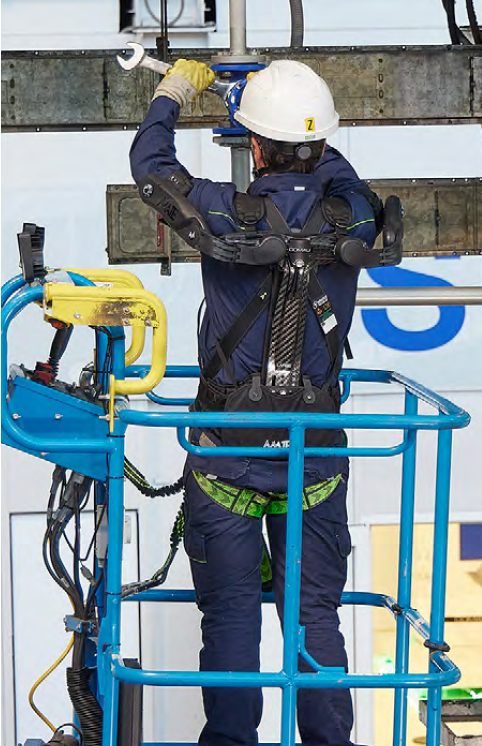
Conceptual illustration of a potential application. Suitability should be evaluated for the specific person, task, and work environment.
START WITH THE WORK
Different Industries. Familiar Physical Demands.
The industry may change. The starting point does not: understand what the person is being asked to do.
REACHING & ELEVATED ARMS
Work performed overhead or away from the body for repeated or sustained periods.
LIFTING & HANDLING
Moving materials, parts, tools, supplies, and equipment through the workday.
BENDING & SQUATTING
Tasks that repeatedly bring the worker toward the floor, equipment, or materials.
SUSTAINED POSTURES
Work that requires holding physically demanding positions while the task is completed.
PLACES WORTH EXPLORING
The Opportunity Is Broader Than Any One Market.
These are examples—not boundaries. The right question is where the physical demands make support worth evaluating.
01 — Manufacturing
Assembly, material handling, maintenance, finishing, and repetitive production tasks.
02 — Warehousing & Logistics
Picking, packing, loading, staging, reaching, and movement of materials.
Field and facility work involving tools, equipment, elevated arms, and sustained positions.
03 — Utilities
Assembly, inspection, maintenance, and work around complex equipment and structures.
04 — Aerospace
Hands-on maintenance and repair where the work environment changes from task to task.
05 — Field Service
06 — Construction & Trades
Selected tasks involving lifting, reaching, bending, tools, and sustained physical positions.
TWO TYPES OF SUPPORT
Match the Technology to the Physical Demand.
The product should follow the work—not define it.
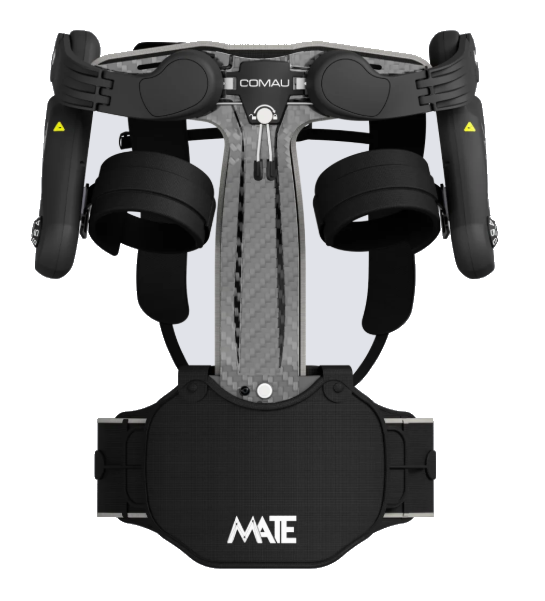
SHOULDER & ARM SUPPORT
MATE XT-GO
For work involving repetitive or sustained shoulder and arm activity.
Passive. Battery-free. Wearable.
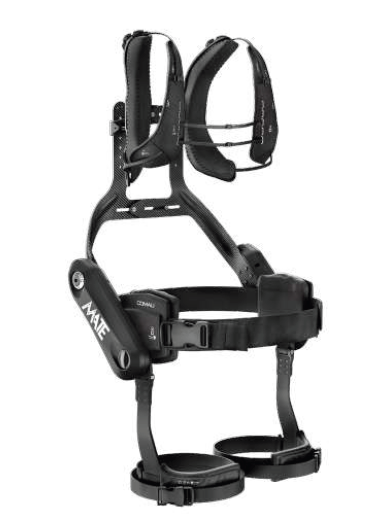
LOWER-BACK SUPPORT
MATE XB
For work involving bending, lifting, squatting, and sustained forward posture.
Passive. Non-powered. Wearable.
A BROADER QUESTION
Don’t Start With the Industry.
Start with the person, the task, and the physical demand.
If the work is physically demanding, it may be worth understanding whether wearable support fits.
ONE EXAMPLE
Look at the Task Where It Happens.
Materials handling is one example of work that can combine reaching, lifting, bending, movement, and repetition.
The goal is not to assume wearable support belongs there. The goal is to identify a worthwhile task and evaluate it with the people doing the work.
One Task. One Team. One Evaluation.
A focused evaluation can tell you more than a broad assumption ever will.
KEEP LOOKING
New Environments Create New Questions.
That is part of the opportunity.
Observe the work.
Understand the physical demand before considering the technology.
Listen to the people doing it.
They know where support may help—and where equipment may get in the way.
Evaluate before you scale.
Let the actual experience determine whether there is a reason to continue.
WHERE ELSE?
What Work Environment Would You Explore Next?
If there is one physically demanding task worth understanding, that is enough to start the conversation.