
HEALTHCARE WORKERS
Protecting the People Who Protect Others.
Supporting the people behind patient care.
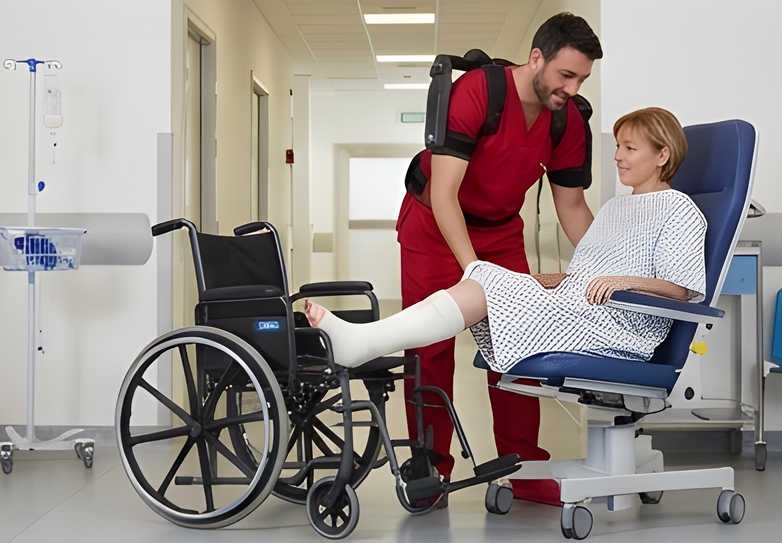
Healthcare depends on people performing work that can be both highly skilled and physically demanding.
Patient assistance. Rehabilitation. Positioning. Equipment handling. Repetitive clinical activities.
Where can wearable ergonomic support help?
THE WORK
Healthcare Work Is Human Work.
Technology continues to advance, but many essential healthcare activities still depend on people physically interacting with patients, equipment, and the care environment.
Moving equipment, supplies, and assisting with physically demanding activities.
Lifting & Handling
Bending & Positioning
Working around beds, patients, equipment, and changing care environments.
Reaching & Arm Activity
Repetitive or sustained upper body activity during clinical and support work.
Holding demanding positions while attention remains focused on the patient or task.
Sustained Postures
POTENTIAL AREAS TO EXPLORE
Where Might Wearable Support Help?
The opportunity is not one job or one department. It begins by identifying physical demands worth understanding.
01 — Patient Mobility & Assistance
Activities that involve helping patients move, transfer, or reposition.
02 — Rehabilitation & Physical Therapy
Repetitive and sustained physical activity while working directly with patients.
Work around beds and treatment areas that can require bending, reaching, or sustained positions.
03 — Patient Positioning
04 — Equipment & Supply Handling
Moving, staging, stocking, and handling equipment or materials throughout the facility.
05 — Procedural & Clinical Tasks
Upper-body activity or sustained postures associated with selected clinical work.
06 — Long-Term & Assisted Care
Recurring physical demands in environments where hands-on care remains essential.
TWO TYPES OF SUPPORT
Different Physical Demands Call for Different Support.
Start with what the person is being asked to do, then consider whether the technology fits.
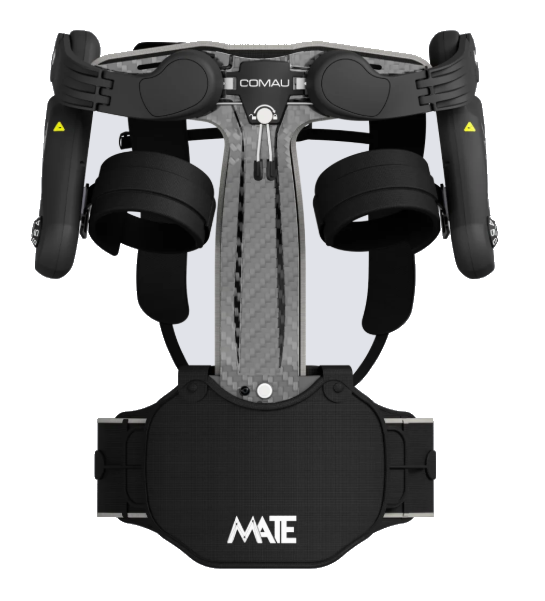
SHOULDER & ARM SUPPORT
MATE XT-GO
Designed to support work involving repetitive or sustained shoulder and arm activity.
REACHING · ELEVATED ARMS
REPETITIVE MOVEMENT · SUSTAINED POSITIONS
Passive. Battery-free. Wearable.
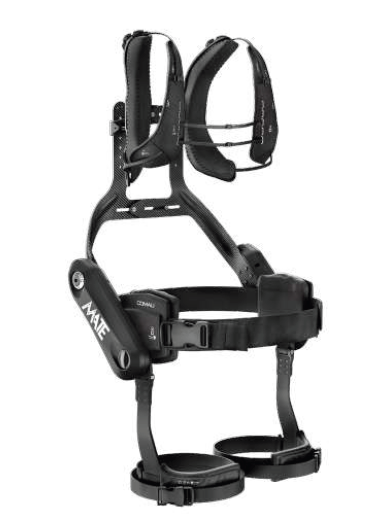
LOWER-BACK SUPPORT
MATE XB
Designed to support work involving bending, lifting, squatting, and sustained forward posture.
LIFTING · BENDING
SQUATTING · FORWARD POSTURE
Passive. Non-powered. Wearable.
START WITH THE PEOPLE
Start With the People Who Know the Work.
Healthcare leaders understand the challenge.
Healthcare workers understand the work.
That’s why the people performing the task should be part of evaluating whether wearable support fits.
EVALUATION, NOT ASSUMPTION
Find Out in the Work.
A promising application on paper is only a starting point. Suitability should be evaluated with the actual person, task, workflow, and environment.
Listen to the people doing the work.
They understand the task, the constraints, and what useful support would need to feel like.
See how the technology interacts with movement, tools, equipment, and workflow.
Evaluate the actual task.
Use the experience to decide whether there is a reason to continue, adjust, or stop.
Learn before you scale.
START WITH ONE TASK
Where Can Wearable Ergonomic Support Help Your People?
You don’t need to decide whether wearable ergonomics belongs throughout your organization. Start with one task worth understanding.