
AUTOMOTIVE SERVICE CENTERS
Ergonomic Support Where the Work Gets Done.
Vehicles have changed dramatically. The physical demands of servicing them haven’t disappeared.
Modern service operations depend on skilled technicians performing hands-on work—often in demanding positions, repeatedly, throughout the day.
Where can wearable support help?
Conceptual illustration of a potential application. Suitability should be evaluated for the specific person, task, and work environment.
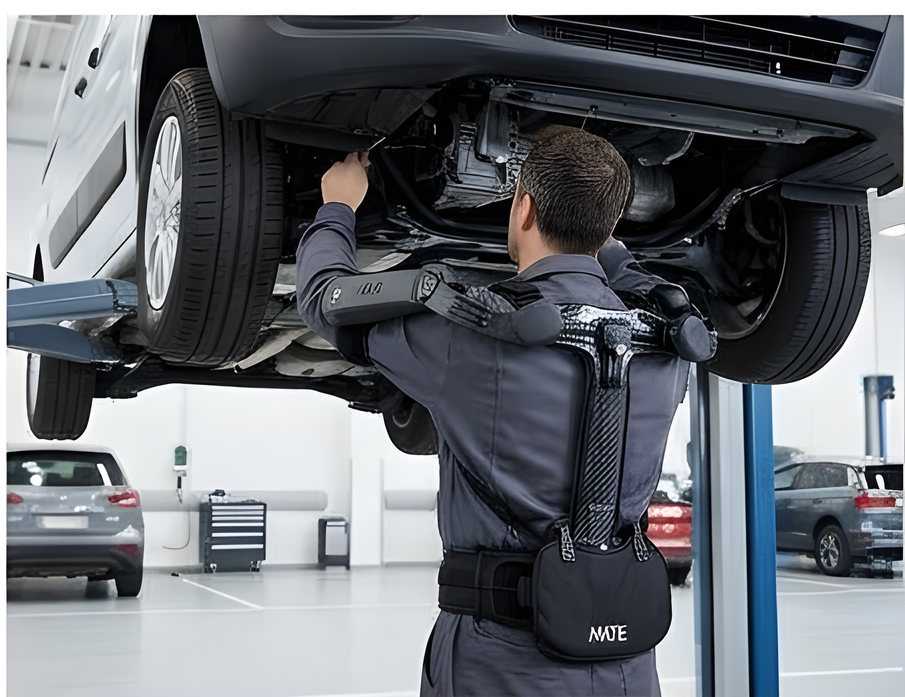
THE TECHNICIAN IS ESSENTIAL
Technology Doesn’t Have to Replace the Technician to Improve the Work.
Diagnostic technology advances. Tools improve. Vehicles become more sophisticated.
But many service and maintenance tasks still require skilled people to physically interact with the vehicle.
The technician remains an essential part of the service system.
OVERHEAD & ARM ACTIVITY
Repeated reaching and sustained upper-body work around raised vehicles and components.
LIFTING & HANDLING
Moving tires, wheels, parts, tools, batteries, and other service equipment.
BENDING & POSITIONING
Working around vehicles at changing heights and in constrained positions.
REPETITIVE WORK
Physical demands repeated across service, maintenance, inspection, and repair tasks.
POTENTIAL AREAS TO EXPLORE
Where Might Wearable Support Help?
Start with the tasks technicians perform every day and the physical demands those tasks create.
Routine hands-on work involving reaching, positioning, bending, and tool use.
01 — Service & Maintenance
Sustained or repetitive shoulder and arm activity beneath raised vehicles and equipment.
02 — Overhead Work
Handling, positioning, removing, and installing wheels and tires.
03 — Wheels & Tires
Moving and positioning parts, components, tools, and service equipment.
04 — Parts & Components
Physical tasks involving sustained positions, repetitive movement, and hands-on repair work.
05 — Collision & Repair
Repeated maintenance and service tasks across vehicles, equipment, and facilities.
06 — Fleet Operations
TWO TYPES OF SUPPORT
Different Physical Demands Call for Different Support.
Start with what the technician is being asked to do, then consider whether the technology fits.
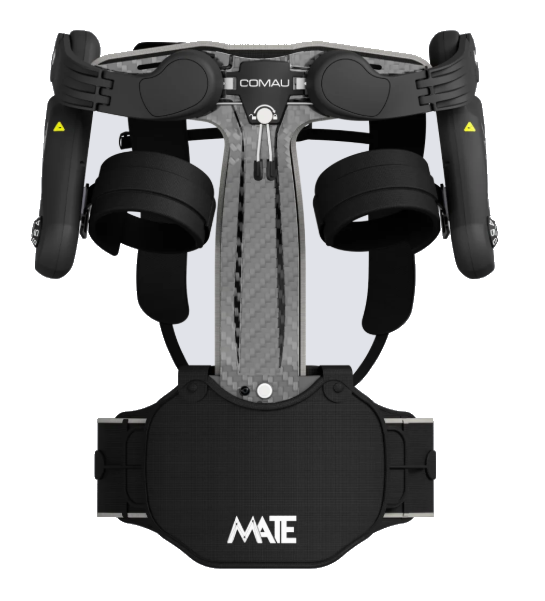
SHOULDER & ARM SUPPORT
MATE XT-GO
For overhead service, repetitive reaching, and sustained shoulder and arm activity.
Passive. Battery-free. Wearable.
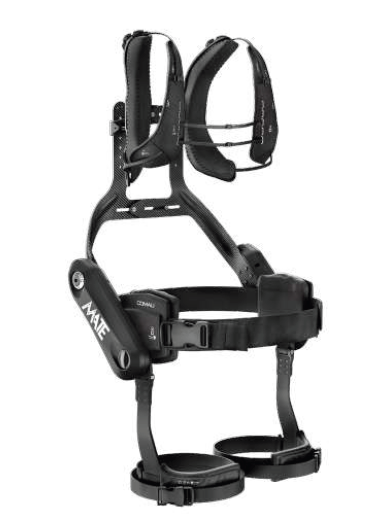
LOWER-BACK SUPPORT
MATE XB
For wheel and tire handling, parts handling, maintenance, and repetitive bending.
Passive. Non-powered. Wearable.
THE PRACTICAL TEST
The Best Tool Is the One Technicians Will Actually Use.
A wearable solution has to work in the service bay—not just in a demonstration.
Does it allow natural movement? Does it work with tools and equipment? Does it provide useful support?
Does the technician believe it helps?
START IN THE SERVICE BAY
Begin With the Work Technicians Know Best.
The service bay provides a practical place to understand where physical demands show up repeatedly.
Observe the task, listen to the technician, and evaluate whether wearable support fits the person, the work, and the environment.
One Task. One Team. One Evaluation.
Choose a specific task and let the technician’s experience help guide what comes next.
BEYOND THE DEALERSHIP
The Work Extends Across Automotive Service.
The same evaluation mindset can apply wherever skilled people maintain, repair, inspect, and service vehicles or equipment.
Dealership service operations.
Explore repetitive physical demands across maintenance, repair, parts, and service workflows.
Fleet and commercial service.
Consider tasks repeated across vehicles, equipment, and maintenance facilities.
Collision and specialty repair.
Look for demanding positions, repeated reaching, handling, and sustained physical work.
LEARN FIRST. SCALE SECOND.
Let the Experience Guide the Next Decision.
A promising application is a reason to evaluate—not a reason to assume.
Listen to the technician.
Understand where the physical demand occurs and what support can or cannot interfere with.
Evaluate the actual task.
See how the technology interacts with vehicles, lifts, tools, movement, and workflow.
Decide what comes next.
Understand what worked, what didn’t, and whether there is a reason to continue.
START WITH ONE TASK
What Task Would Your Technicians Identify First?
You don’t need to decide whether wearable ergonomics belongs across the operation. Identify one task worth understanding.