
COMPETITIVE MOTORSPORTS
Supporting the People Behind Performance.
Every second on the track depends on countless hours of work behind it.
Racing depends on people building, preparing, adjusting, repairing, moving, and maintaining what it takes to compete.
Much of that work remains physical.
Can wearable technology support the people behind performance?
Conceptual illustration of a potential application. Suitability should be evaluated for the specific person, task, and work environment.
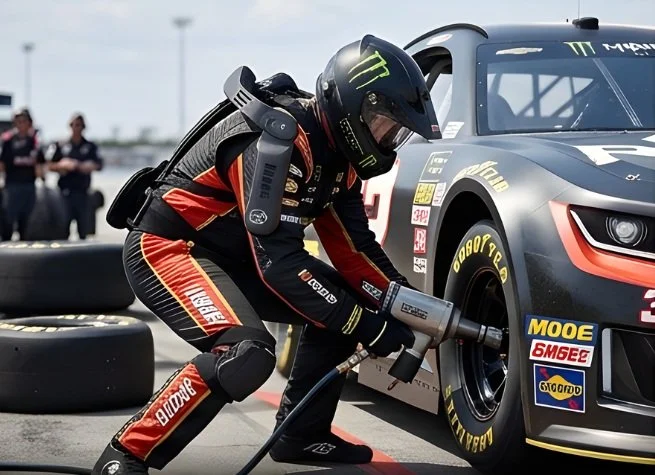
BEHIND PERFORMANCE
Performance Starts Long Before Race Day.
The work happens in fabrication, assembly, vehicle preparation, maintenance, transport, and at the track—often involving repetitive movement, sustained positions, lifting, bending, and reaching.
The human being is part of the performance system.
REACHING & ARM ACTIVITY
Repeated or sustained upper-body work during preparation, fabrication, assembly, and service.
LIFTING & HANDLING
Moving parts, equipment, tires, tools, and materials throughout the operation.
BENDING & POSITIONING
Working around vehicles and equipment in constrained or changing positions.
SUSTAINED POSTURES
Holding demanding positions while precision and attention remain essential.
POTENTIAL AREAS TO EXPLORE
Where Might Wearable Support Help?
The opportunity extends beyond the pit lane. Start by looking at the work that happens every day.
Repetitive reaching, positioning, tool use, and sustained upper-body activity.
01 — Fabrication & Assembly
Hands-on work around the vehicle before testing, practice, qualifying, and competition.
02 — Vehicle Preparation
Service tasks that can involve reaching, bending, handling, and sustained positions.
03 — Maintenance & Repair
04 — Parts & Equipment Handling
Moving and staging tires, components, tools, and other equipment.
Loading, unloading, staging, and preparing equipment at the shop and track.
05 — Transport & Setup
Selected physical tasks where speed, movement, and freedom to work remain critical.
06 — Race-Day Operations
TWO TYPES OF SUPPORT
Different Physical Demands Call for Different Support.
Start with what the crew member is being asked to do, then consider whether the technology fits.
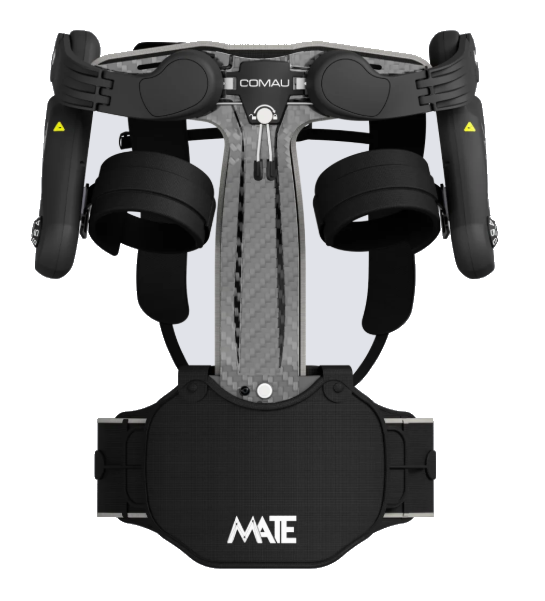
SHOULDER & ARM SUPPORT
MATE XT-GO
Designed to support work involving repetitive or sustained shoulder and arm activity.
REACHING · ELEVATED ARMS
REPETITIVE MOVEMENT · SUSTAINED POSITIONS
Passive. Battery-free. Wearable.
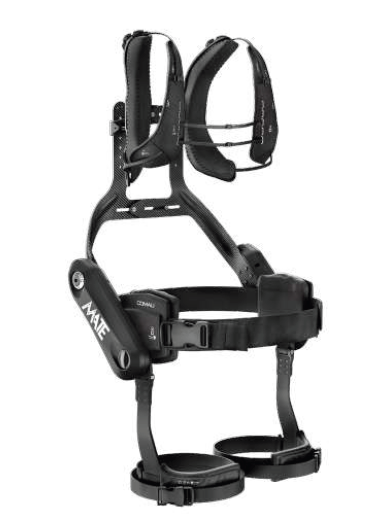
LOWER-BACK SUPPORT
MATE XB
Designed to support work involving bending, lifting, squatting, and sustained forward posture.
LIFTING · BENDING
SQUATTING · FORWARD POSTURE
Passive. Non-powered. Wearable.
THE STANDARD
Equipment Has to Earn Its Place.
Race teams don’t add equipment simply because the technology is interesting.
It has to work. It has to fit the environment. And it can’t interfere with the job.
We believe wearable technology should meet the same standard.
Does it help the person without getting in the way?
START IN THE SHOP
Begin Where the Work Is Repeated.
Race day is visible. The shop is where much of the work is repeated day after day.
Fabrication, vehicle preparation, maintenance, assembly, and equipment handling can provide practical places to understand whether wearable support fits the person, task, and environment.
One Task. One Team. One Evaluation.
Start with a specific physical demand and let the experience guide the next decision.
FROM EVALUATION TO POSSIBILITY
Learn Before You Scale.
A promising application is a reason to evaluate—not a reason to assume.
Listen to the people doing the work.
They know where physical demands show up and what equipment can or cannot interfere with.
Evaluate the actual task.
See how the technology interacts with tools, vehicles, movement, pace, and workflow.
Let performance guide the decision.
Understand what worked, what didn’t, and whether there is a reason to continue.
START WITH ONE TASK
What Task Would You Evaluate First?
You don’t need to decide whether wearable ergonomics belongs across the operation. Identify one task worth understanding.